
Mechanism
From token to grounded kernel.
The same four verbs run on every input — Measure, Count, Differentiate, Compose. Below is the whole mechanism in order, with the subsystem that owns each step. Nothing has to move to be understood; the diagrams are still and the meaning lives in the words.
Measure → Count → Differentiate → Compose
The four verbs, in sequence.
One sentence enters on the left and leaves as a cited kernel on the right. Each panel is the same input, one verb further along.
-
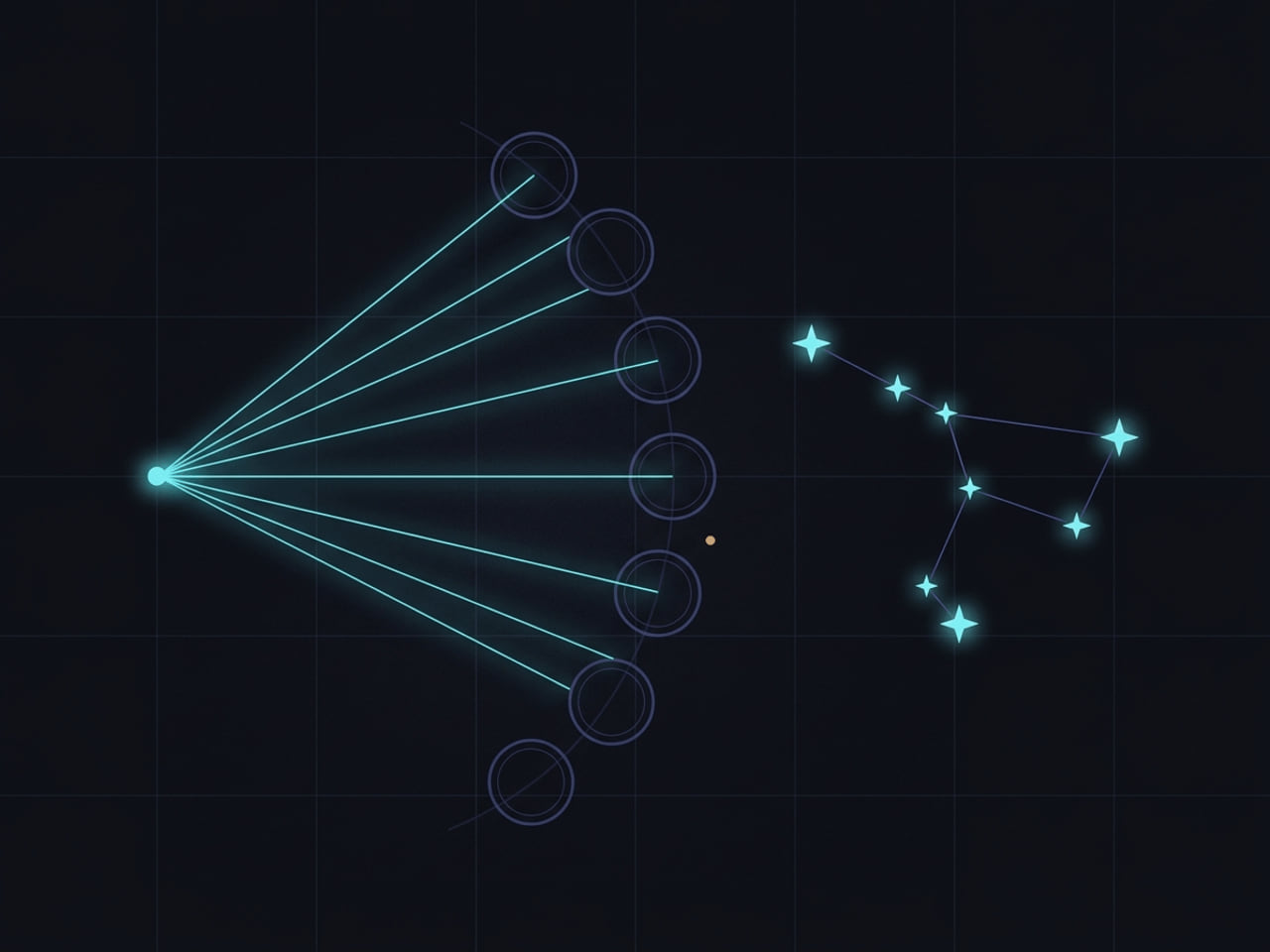
Measure One input is seen through many independent lenses, becoming a constellation instead of one flattened vector. -
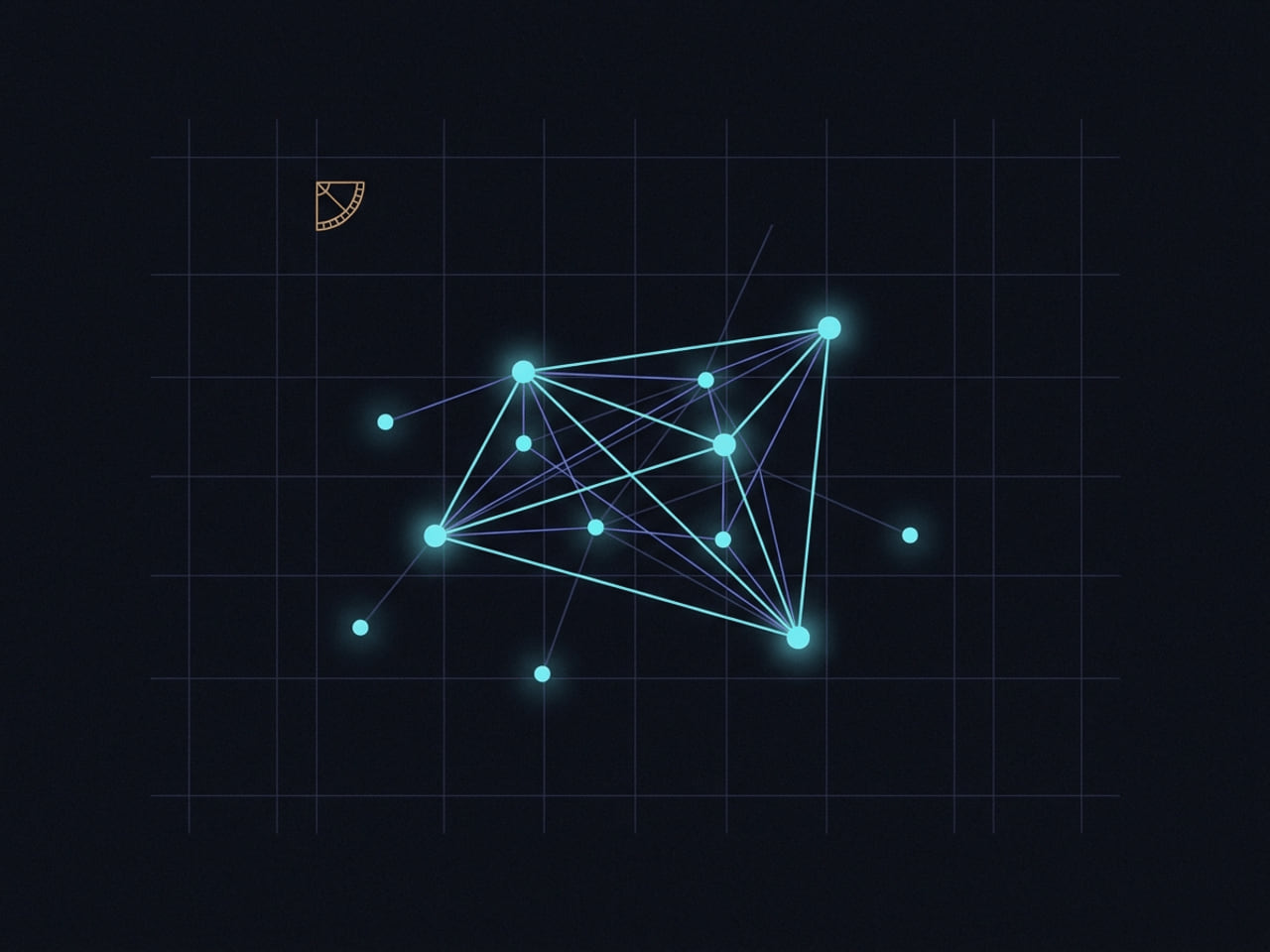
Count Calyx derives the associations between those views — agreement and relationship — into a connected concept graph. -
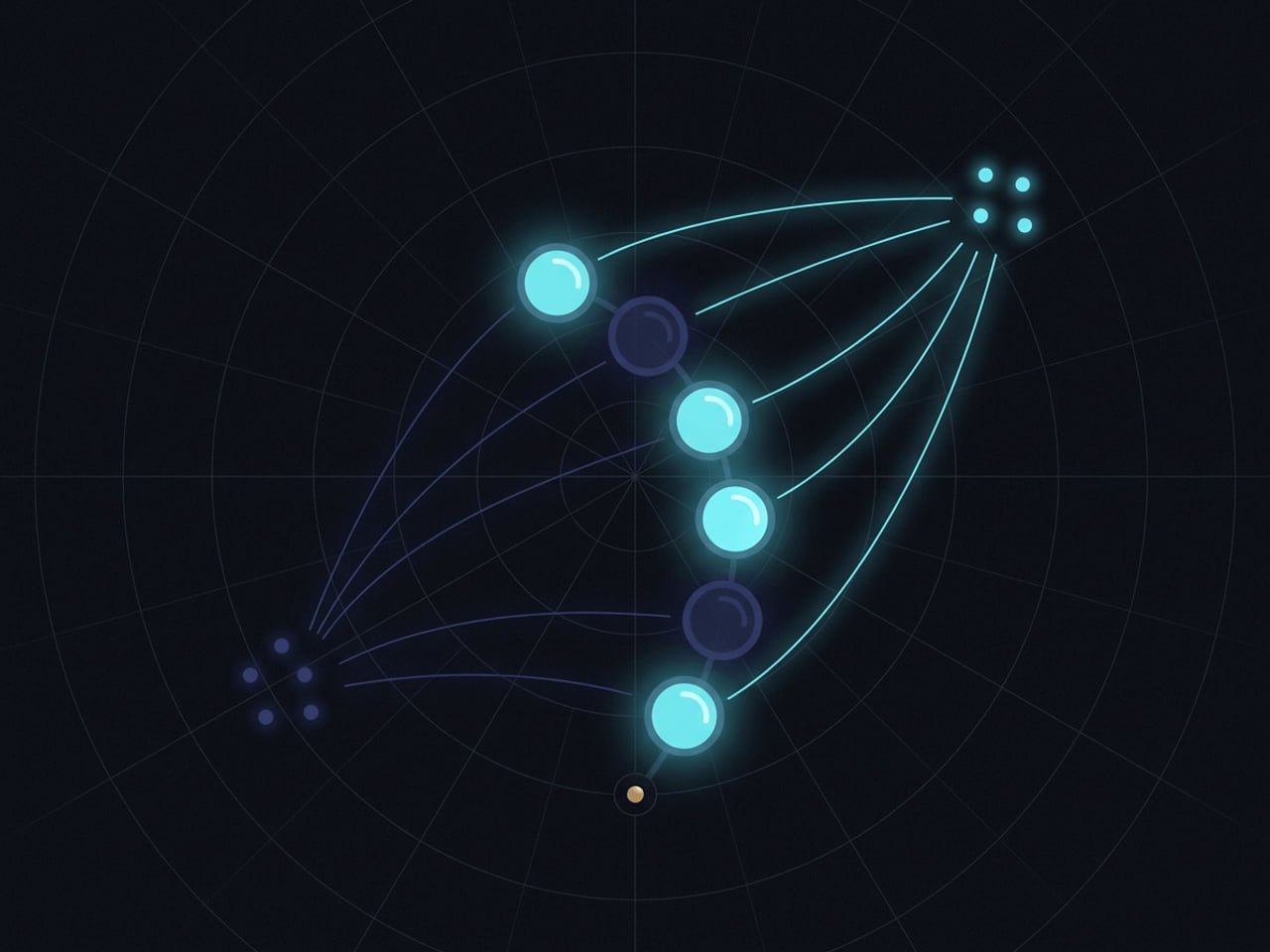
Differentiate It quantifies the unique signal each lens actually adds, keeping the informative lenses and de-weighting the redundant ones. -
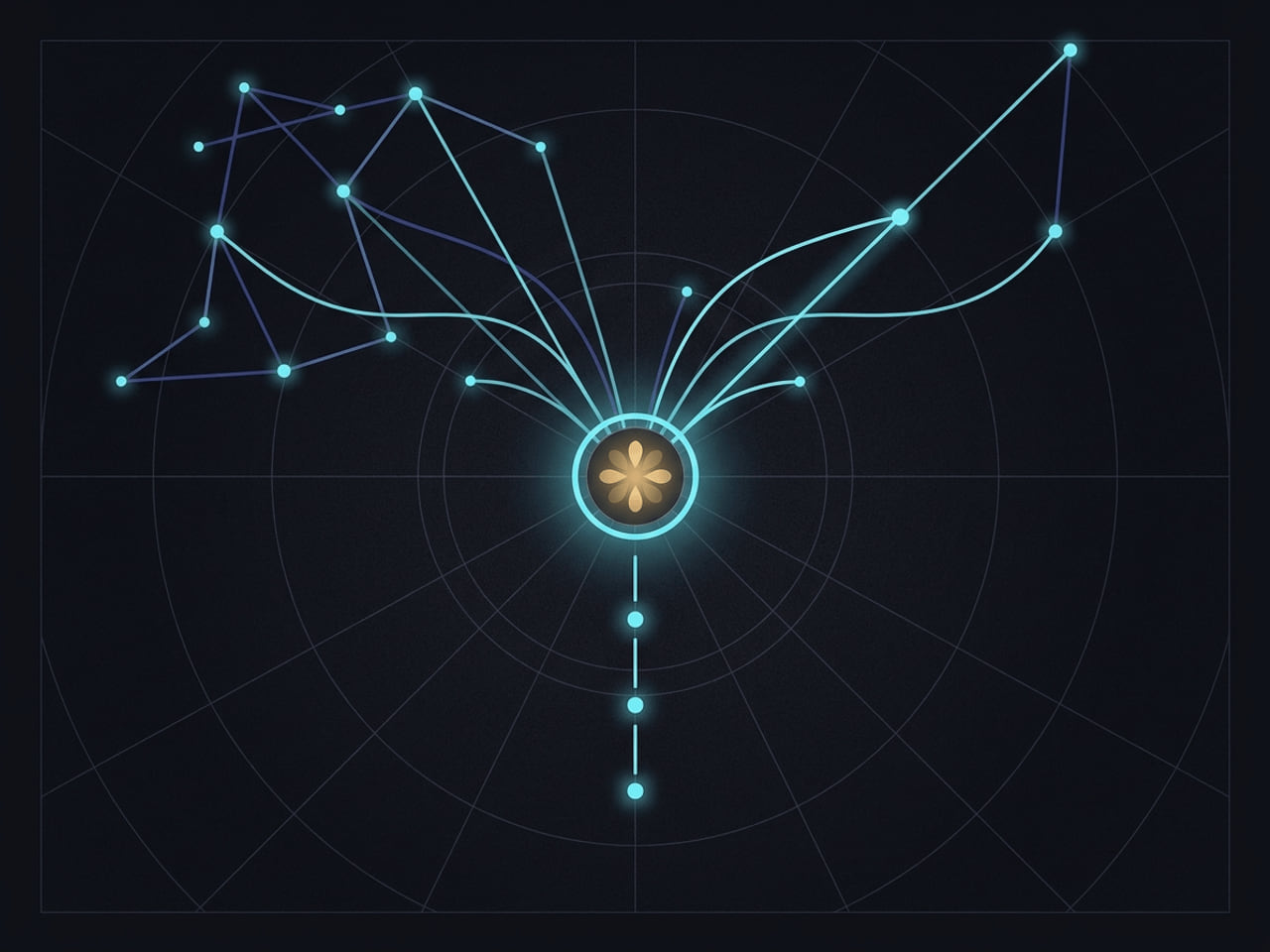
Compose Where the lenses agree, one grounded kernel forms behind a fail-closed guard — and every answer leaves a citation trail.
Step by step
What each verb does, and who owns it.
-
01
One input is seen through many lenses.
A token sequence is not flattened into a single vector. Each frozen lens plots the same input from its own angle, so the record stays a constellation of distinct views instead of one opaque blob.
-
02
Associations between the views are derived.
Calyx measures where the lenses agree and how the views relate, weaving the placements into a connected concept graph rather than a flat list of nearest neighbors.
-
03
Each lens is weighed by the signal it adds.
Redundant lenses are de-weighted; the lenses that carry unique information are kept. The system quantifies what every view actually contributes instead of averaging them into noise.
-
04
A grounded kernel forms behind a guard.
Where the kept lenses agree, one kernel blooms. Ward holds generation closed until the evidence supports an answer, and Ledger leaves a citation trail on everything that ships.
Keep going
See the mechanism on real work.
The same four verbs power grounded retrieval, durable memory, and knowledge tracing.