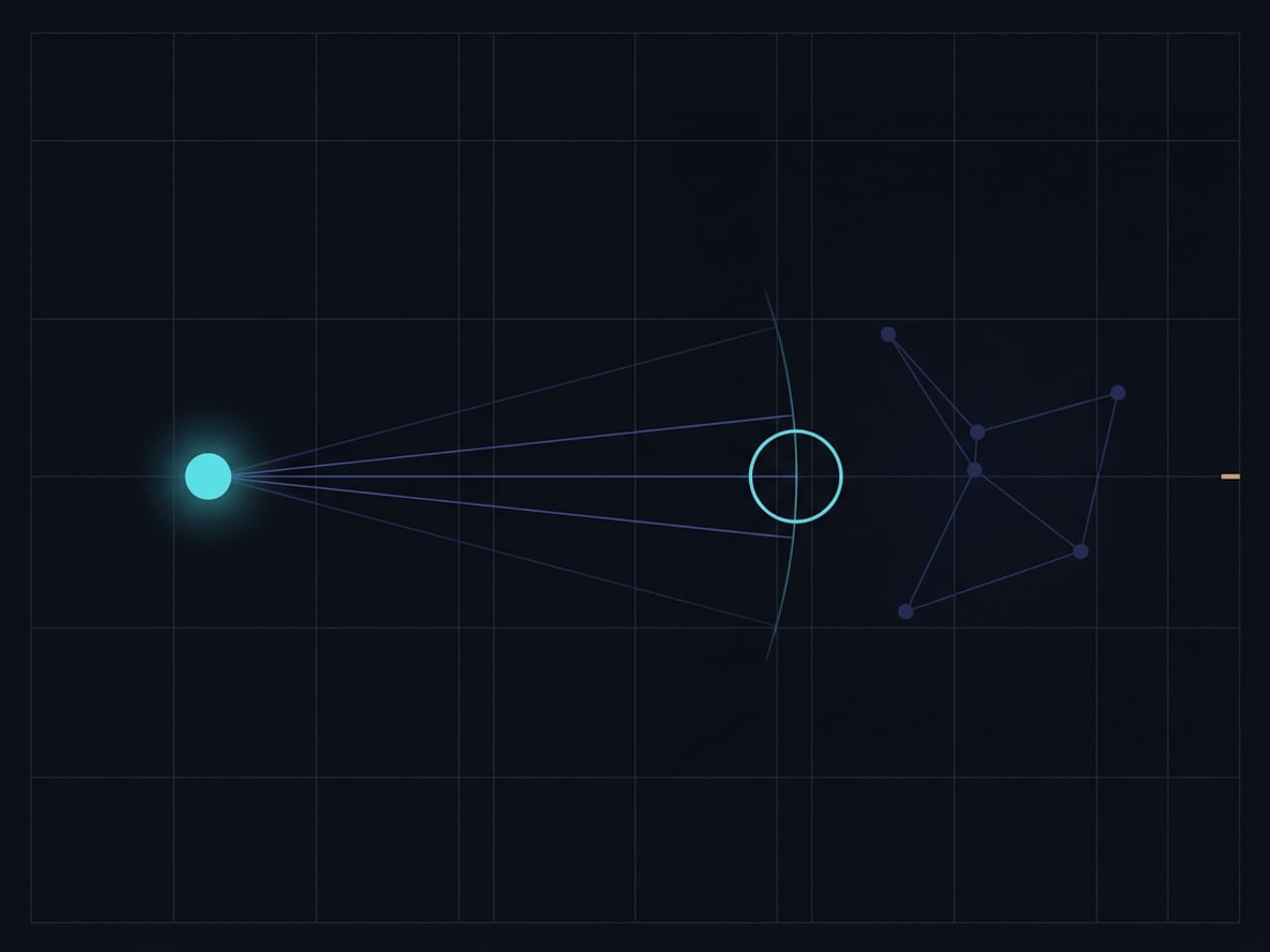
The same four verbs power very different systems. Each use case below leans on one verb and
proves one part of the trust discipline — grounded, no-flatten, fail-closed — on real work.
Use cases with proof
ComposeGrounded RAG that refuses
When the evidence does not support an answer, the system holds at a fail-closed guard instead
of bluffing. No kernel blooms until the sources back it, and every answer that does ship carries
a citation trail.
Ward holds generation closed on ungrounded queries; Ledger records the sources behind
each answer.
MeasureDurable AI memory
Each input is kept as a distinct constellation in durable memory and recalled grounded, rather
than flattened into one opaque blob. Distinctions stay distinct, so recall returns meaning instead
of an averaged smear.
Aster stores each input as its own constellation; recall is by association, not by a
single collapsed vector.
More to come
Knowledge tracing is next.
Knowledge tracing — measuring which concepts a learner actually grasps versus fluent
pattern-matching — runs on the Differentiate verb. We will publish its live demo here once
the proof is real, not before. We would rather show an empty space than a staged one.